



By: Tambria Marsh, LCSWA
Losing a parent is hard. No amount of preparation truly prepares you for grief and loss. You may know that death is coming, but that does not mean the journey afterward will be easy. One day, life changes forever, and suddenly you are trying to navigate a world without someone who helped shape your identity, your memories, and your sense of comfort.
When I lost my mother, I remember feeling shock when I heard the news. Even when you know someone is sick or struggling, hearing that they are truly gone can feel unreal. It can feel like the world stops while everyone else continues moving forward. In the middle of that pain, another fear crept in: “Who is next?” Losing a parent can create anxiety about losing other people you love. It can make you hyperaware of how fragile life is and how quickly things can change.
What many people do not tell you is that grief can bring emotions and reactions you never expected. Along with sadness, there can be fear, regret, numbness, anger, an even a desire to isolate yourself from others. Some people may find themselves coping in unhealthy ways because the pain feels too overwhelming to carry. Grief can affect your appetite, sleep, concentration, motivation, and relationships. Another difficult aspect of grief is the envy or jealousy that may arise when you see others with their parents or guardians. You may watch someone call their mom for advice or spend time with their dad and feel an ache deep inside because you no longer have that opportunity. These feelings can bring guilt, but they are more common than people realize. Grief often reminds us not only of who we lost, but also of the experiences and future moments we no longer get to have.
What Is Grief?
Grief is the deep, natural, and multifaceted emotional reaction to a significant loss or change, most commonly the death of a loved one. It is a personal experience that can involve emotional, physical, cognitive, and spiritual distress. Grief is not simply sadness. It can include anxiety, confusion, exhaustion, anger, hopelessness, numbness, and many other emotions that may come and go unexpectedly.
One of the most commonly known frameworks for understanding grief is the Kübler-Ross model, often referred to as the “Stages of Grief.” While not everyone experiences every stage or experiences them in order, these stages can help people understand some of the emotions that may arise during the grieving process.
Denial
In this stage, individuals may struggle to believe the loss has truly happened. There can be shock, numbness, or a feeling that the situation is somehow unreal. Denial often acts as a temporary protective mechanism that allows the mind to process overwhelming emotions gradually.
Anger
Anger is a natural and often necessary response to loss. People may feel angry at the situation, themselves, medical professionals, family members, or even God. Underneath anger is often deep pain, helplessness, and frustration over the unfairness of the loss.
Bargaining
Bargaining involves “what if” or “if only” thoughts. Individuals may replay situations in their minds, wishing they had done something differently. Bargaining is often an attempt to regain control or reverse the painful reality of what has happened.
Depression
This stage is characterized by deep sadness, emptiness, and despair. The reality of the loss becomes more apparent, and the weight of grief can feel overwhelming. People may withdraw socially, lose motivation, or feel emotionally exhausted.
Acceptance
Acceptance does not mean forgetting the person or pretending everything is okay. Instead, it means recognizing the reality of the loss and slowly learning how to move forward while carrying the memory of that person with you. Healing does not mean the pain disappears; it means learning how to integrate the loss into your life.
Misconceptions About Grief
There are many misconceptions surrounding grief, and these misunderstandings can make grieving individuals feel isolated or confused. One common misconception is that grief is simply sadness. In reality, grief is complex
and non-linear. It can involve anger, numbness, guilt, fear, relief, confusion, and moments of peace all within the same day. Grief is not weakness, nor is it something that needs to be “fixed” or cured.
Another misconception is that grief has a timeline. Society sometimes pressures people to “move on” after a certain amount of time, but grief does not operate on a schedule. For many people, grief becomes an evolving part of life rather than something that completely disappears.
Many people also believe grief only occurs when someone dies. However, grief can happen after many forms of loss. A person may grieve after a divorce or breakup, the loss of a job, moving to a new place, loss of health, loss of identity, or any major life transition that changes the life they once knew.
I wanted to explain what grief is and is not because many people have misconceptions about it. As someone who lost her mother, I thought once I reached the “acceptance” stage, I would finally be okay and completely healed. Boy, was I wrong. I remember asking myself what was wrong with me because I was still struggling after reaching acceptance. Over time, I learned that acceptance does not mean the grief disappears. It simply means you are learning how to live alongside it.
Triggers
Grief can be unpredictable because triggers are often tied to memories, experiences, and emotions. A trigger can be anything that reminds you of the person or situation connected to your loss.
Triggers may include:
● Holidays and birthdays
● Songs, scents, or places
● Photographs or videos
● Seeing others with their loved ones
● Significant milestones
● Social media memories
● Anniversaries of the loss
Sometimes triggers happen unexpectedly. You may feel fine one moment and overwhelmed the next because something reminded you of the person you lost. This does not mean you are “failing” at healing. It simply means grief is deeply connected to love and memory.
A Game Plan for Coping With Grief
Although grief cannot be erased, there are healthy ways to cope and care for yourself through the process.
Activities That May Help
● Engaging in exercise
● Practicing self-care
● Allowing yourself to feel your emotions instead of suppressing them
● Participating in activities that remind you of your loved one
● Journaling your thoughts and feelings
● Practicing breathwork or mindfulness
● Spending time in nature
Healing does not look the same for everyone. Some days may feel manageable, while others feel incredibly heavy. Give yourself permission to grieve without judging where you are in the process.
The Importance of Community
Grief can feel isolating, which is why community matters. Having trusted people you feel safe talking to can make a significant difference. Support groups can provide comfort by connecting you with others who understand similar pain. Seeking professional help through counseling or therapy can also provide guidance and support during difficult seasons.
Resources
If you are grieving and need support, the following resources may be helpful:
● GriefShare
● Celebrate Recovery
● Emotions Anonymous International
● Alcoholics Anonymous & Narcotics Anonymous
If your grief has led to substance abuse struggles, organizations such as Alcoholics Anonymous (AA) and Narcotics Anonymous (NA) may provide support and community. If you are contemplating suicide or experiencing a mental health crisis, please call or text 988. The 988 Suicide & Crisis Lifeline is a nationwide resource that connects individuals directly to trained crisis counselors 24 hours a day.
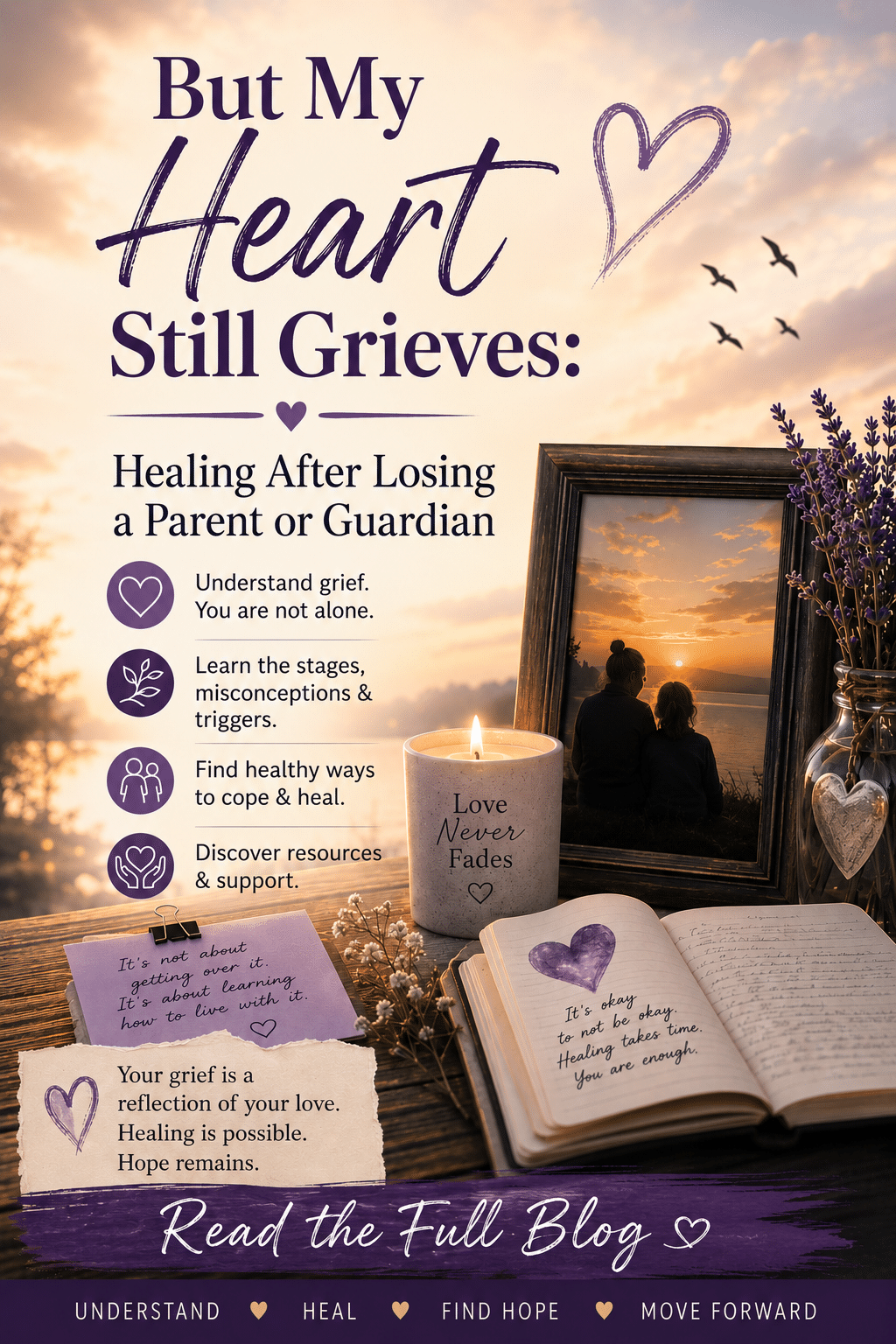
Grief is not something you “get over.” It is something you learn to carry. Some days will feel lighter than others, and healing may not look the way you expected. Be patient with yourself. Your grief reflects the depth of your love, and even in the pain, there is hope for healing, support, and continued life forward.