
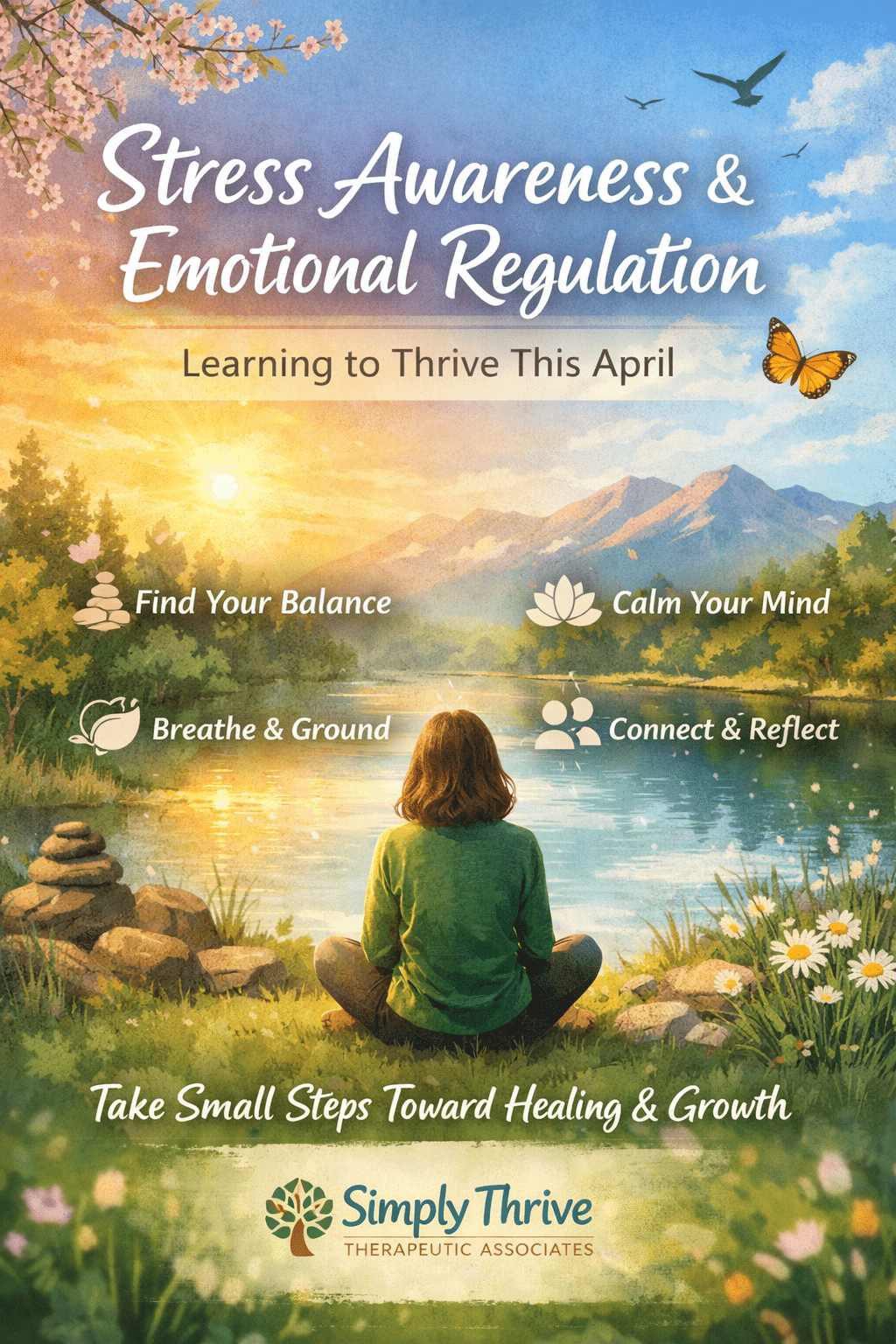

April is a season of growth, transition, and renewal. As the world around us begins to shift, it can also bring an increase in stress, whether that shows up as feeling overwhelmed, disconnected, irritable, or simply “off.” At Simply Thrive Therapeutic Associates, we are dedicating this month to Stress Awareness and Emotional Regulation, because understanding how stress impacts us is the first step toward creating meaningful, lasting change.
What Is Stress, Really?
Stress isn’t just something that happens in your mind; it affects your entire body and nervous system.
It can show up in ways you might not immediately recognize:
- Increased irritability or emotional reactivity
- Difficulty sleeping or constant fatigue
- Trouble focusing or feeling mentally “foggy”
- Physical symptoms like headaches, tension, or stomach discomfort
- Withdrawal from relationships or feeling disconnected
Stress is not a personal failure; it’s your body’s way of trying to protect you. The goal isn’t to eliminate stress completely (which isn’t realistic), but to learn how to recognize it and respond in a way that supports your well-being.
Understanding Your Nervous System
One of the most powerful tools for managing stress is understanding your nervous system.
Your nervous system is constantly scanning for safety or threat. When it senses danger (even emotional or perceived danger), it shifts into survival modes like:
- Fight (anger, frustration)
- Flight (anxiety, avoidance)
- Freeze (shutdown, numbness)
Emotional regulation isn’t about “controlling” your feelings; it’s about learning how to support your body so it can return to a place of safety and balance.
Practical Tools for Emotional Regulation
Building emotional regulation skills doesn’t have to be overwhelming. Small, consistent practices can create powerful change over time.
Here are a few simple strategies to start with:
1. Grounding in the Present Moment
When stress rises, bring your attention back to the here and now:
- Name 5 things you can see
- 4 things you can feel
- 3 things you can hear
- 2 things you can smell
- 1 thing you can taste
This helps signal to your brain: I am safe in this moment.
2. Pause Before You React
Stress often shows up in our relationships.
Try:
- Taking a breath before responding
- Noticing what you’re feeling (“I’m overwhelmed right now”)
- Choosing a response instead of reacting automatically
This creates space for more intentional, connected communication.
3. Regulate Through the Body
Your body plays a key role in calming your nervous system:
- Slow, deep breathing (inhale 4, exhale 6)
- Stretching or gentle movement
- Stepping outside for fresh air
Even a few minutes can help reset your system.
4. Build Awareness Without Judgment
Instead of criticizing yourself for feeling stressed, try curiosity:
- “What is my body trying to tell me?”
- “What do I need right now?”
Awareness without judgment is where growth begins.
Supporting Families & Relationships
Stress doesn’t just impact individuals; it affects families and relationships, too.
This month, we are also focusing on:
- Improving communication between parents and children
- Helping families understand emotional responses (especially in teens)
- Building shared coping strategies that strengthen connection
When we understand our own stress responses, we can better support the people we care about.
Moving Toward Resilience
Emotional resilience isn’t about avoiding stress; it’s about developing the ability to move through it with awareness, support, and skill.
At Simply Thrive, our mission is to help individuals and families reconnect with what matters most, while continuing to eliminate the stigma around mental health.
This April, we invite you to:
- Slow down
- Check in with yourself
- Practice one small skill each day
Because healing and growth don’t happen all at once; they happen in small, meaningful steps.
You Deserve to Thrive
If you’ve been feeling overwhelmed, you are not alone; and you don’t have to navigate it by yourself.
This month, give yourself permission to care for your mental and emotional well-being.
You deserve to dare to thrive, not just survive.